Birgu vs Kappara
Side-by-side comparison of property prices, lifestyle, and practical info to help you choose the right area.
Summary
Birgu is better for culture lovers and tourists seeking heritage living, while Kappara suits young professionals and families wanting convenient access to the Sliema corridor. Birgu is a fortified peninsula with Malta's richest maritime history, featuring Fort St. Angelo and a restored marina waterfront. Kappara is a compact hillside suburb between San Ġwann and Gżira, offering quieter residential streets with strong transport links to commercial hubs. The two areas are approximately 10 km apart — a 20-minute drive.
Birgu scores highest in safety (9/10) and dining (8/10) but low on beaches (3/10). The 5-minute Valletta ferry is a key advantage, though reaching Sliema or St. Julian's takes 35–45 minutes. Kappara rates highest for transport (9/10) and family suitability (8/10), with buses to Sliema in 10 minutes and Valletta in 15 minutes. Birgu's heritage properties cost less than equivalent architecture in Valletta and Sliema but often require restoration. Kappara offers mid-range pricing below Swieqi or Sliema seafront, with a mix of townhouses and apartments.
Birgu's population of 2,700 maintains an authentic local character with limited nightlife (4/10). Kappara's 3,000 residents benefit from proximity to entertainment without the noise — nightlife rates 5/10 and dining 6/10. Birgu requires a 20-minute drive to the airport; Kappara takes 25 minutes. Foreign buyers can purchase without AIP permits in Birgu's Cottonera Waterfront SDA zone, while Kappara has no SDA-designated areas.
Living in Birgu
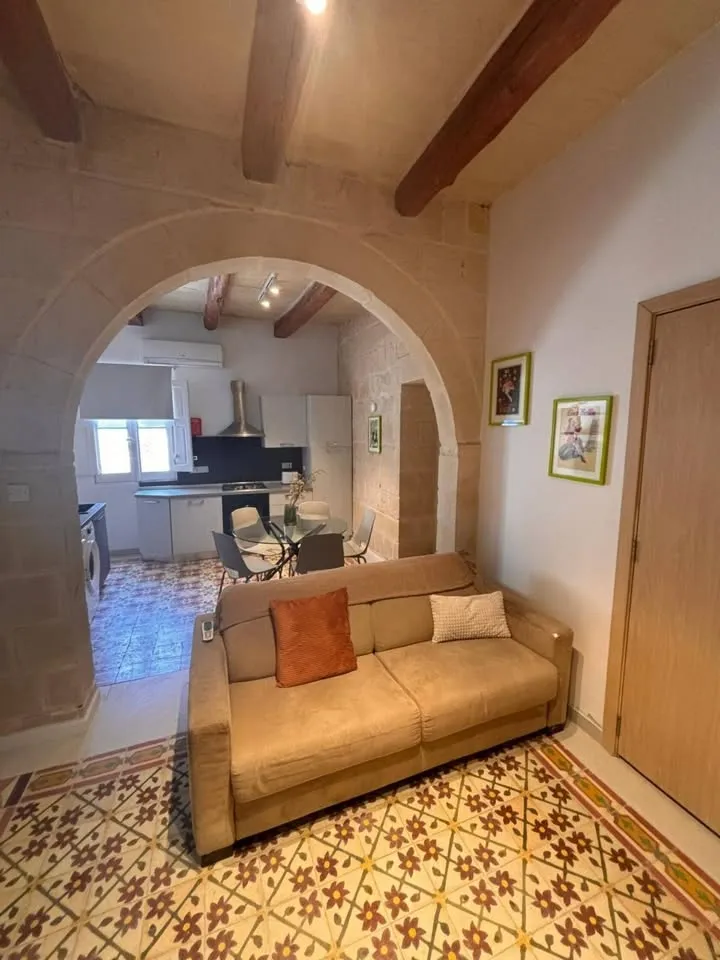
Birgu — also known as Vittoriosa — is the oldest of Malta's Three Cities and arguably the most historically significant town on the island. Long before Valletta existed, Birgu was the base of the Knights of St. John when they arrived in 1530. Fort St. Angelo, the fortress at the tip of the peninsula, commanded the Grand Harbour and became the Knights' headquarters during the Great Siege of 1565, when the Ottoman Empire threw everything it had at Malta and failed. The town's narrow streets are a living archive of Maltese history. Auberges built for the Langues of the Knights, restored palazzos with painted ceilings, and centuries-old churches sit alongside traditional Maltese houses with their characteristic enclosed wooden balconies. The waterfront has been beautifully restored into a marina and promenade — the Couvre Porte gate marks the entrance to the old Collacchio, the original knights' quarter. Birgu is experiencing a quiet renaissance. Heritage-minded buyers are restoring old properties, a handful of excellent restaurants have opened along the marina, and the European Maritime Day put the town on the map in 2024. Property is still affordable relative to its architectural quality — you can buy a 400-year-old townhouse here for less than a modern apartment in Sliema. The trade-off is distance from the commercial north and limited parking in the historic core.
Highlights
- Fort St. Angelo — HQ of the Knights during the Great Siege of 1565
- Restored marina and waterfront promenade
- Heritage properties at a fraction of Sliema prices
- Malta Maritime Museum and Inquisitor's Palace
- Authentic quiet streets with Grand Harbour views
Living in Kappara
Kappara is a small residential suburb on the boundary between San Gwann and Gzira — a compact neighbourhood of townhouses and apartment blocks that sits on a hillside overlooking the university area. It's not a traditional village; it's a suburban enclave that developed in the mid-20th century as housing spread between the coast and the interior. The area's main appeal is location. Kappara sits at the junction of regional roads connecting Sliema, St. Julian's, the university, and the northern coast. It's a 10-minute drive to Sliema's seafront, a 5-minute drive to the university, and well-connected by bus to everywhere else. The hillside position means some properties enjoy distant sea views. Property in Kappara sits in the mid-range, above San Gwann but below Swieqi. It's popular with professionals who work in the Sliema/St. Julian's business corridor but prefer a quieter residential setting. The housing stock is a mix of older townhouses with character and newer apartment blocks.
Highlights
- Junction location connecting coast and interior
- 10-minute drive to Sliema and St. Julian's
- Hillside position with distant sea views
- Quieter than neighbouring commercial areas
- Mid-range property appealing to professionals
Lifestyle Comparison
Which Area Is Right For You?
Choose Birgu
Birgu comes out ahead in dining, safety .
Choose Kappara
Kappara comes out ahead in family, beaches, nightlife, transport .