Mdina vs Mgarr
Side-by-side comparison of property prices, lifestyle, and practical info to help you choose the right area.
Summary
Mdina is better for culture lovers and tourists seeking a unique heritage experience, while Mgarr suits nature lovers and families wanting rural space near beaches. Mdina is a car-free medieval citadel with fewer than 300 residents, a safety rating of 10 out of 10, and fine dining options such as De Mondion and Fontanella Tea Garden. Mgarr is an agricultural village with a population of 4,100, Malta's most affordable farmhouse properties, and a beach access rating of 9 out of 10, placing residents within minutes of Ghajn Tuffieha, Golden Bay, and Gnejna Bay.
Both areas sit roughly 25 minutes from Malta International Airport by car. Mdina connects to Valletta via bus routes 51 and 52 with a transport rating of 4 out of 10, whereas Mgarr relies on routes 44 and 45 with a transport rating of 3 out of 10 — a personal car is essential here. Mdina delivers exceptional architecture and panoramic bastion views but demands premium property prices and strict conservation compliance. Mgarr provides working farmland, clean air, dark skies, and a strong village community, though amenities are limited and traditional farmhouses require significant maintenance. Nightlife is minimal in both locations, each scoring just 2 out of 10.
Living in Mdina
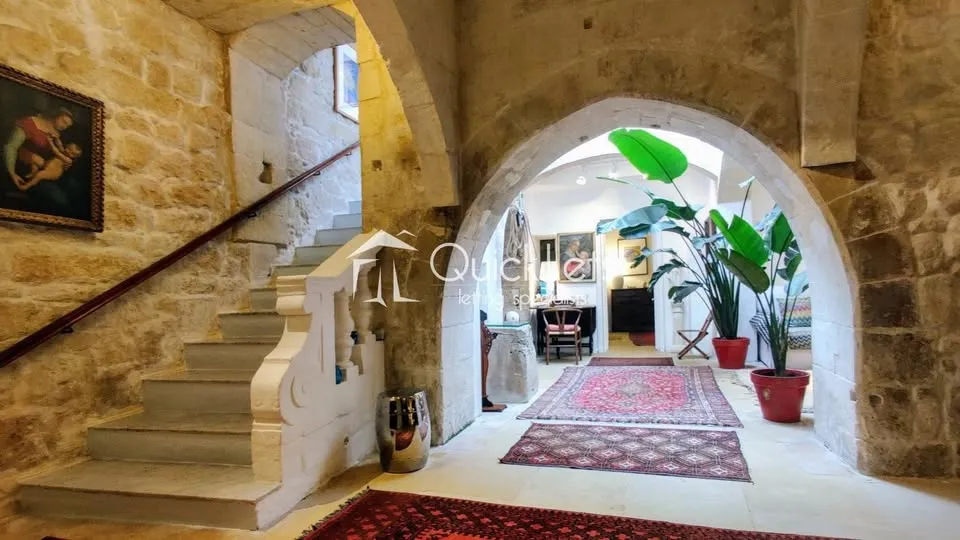
Mdina is the Silent City — a walled medieval citadel on a hilltop in central Malta where cars are banned, tourists whisper, and the only sound is the click of footsteps on golden limestone. Home to fewer than 300 residents, it is one of Europe's smallest inhabited cities and arguably its most atmospheric. The city's history predates the Knights of St. John by centuries. Originally a Phoenician settlement, then a Roman city, then the Arab capital of Malta, Mdina has layer upon layer of history compressed into its tiny footprint. The narrow streets are deliberately non-linear — a defensive trick to confuse invaders, now a maze that delights visitors. Palaces line every alley, many still privately owned by Maltese noble families who've held them for generations. Property in Mdina is rare and tightly regulated. The few apartments and townhouses that come up for sale are heritage-listed, requiring strict adherence to conservation rules. Buyers are getting a piece of history — original stone arches, tiled floors, and walls thick enough to withstand cannon fire. It's not for everyone: no parking, limited amenities, and constant tourist foot traffic. But for a small number of buyers, the chance to live in an 8,000-year-old fortress city is worth every restriction.
Highlights
- Cars banned — one of Europe's few car-free cities
- Fewer than 300 residents in an 8,000-year-old city
- St. Paul's Cathedral — baroque masterpiece
- Panoramic views from the city bastions
- Featured as King's Landing in Game of Thrones Season 1
Living in Mgarr
Mgarr is a rural village in northwest Malta that serves as the island's agricultural heartland. Surrounded by farmland, vineyards, and olive groves, Mgarr produces more of Malta's home-grown food than anywhere else — strawberries, tomatoes, potatoes, and the grapes that go into Malta's growing wine industry. The annual Strawberry Festival draws thousands of visitors each spring. The village centre is a traditional Maltese square dominated by an enormous parish church that's dramatically oversized for the population — locals reportedly wanted to build the largest church in Malta but ran out of funds before completing the dome. The unfinished dome is a source of village pride rather than embarrassment. The surrounding countryside is scattered with cart ruts, megalithic sites, and the Bingemma valley. Property in Mgarr offers rural Malta at its most affordable. Farmhouses with land are still available, and the village has a genuine agricultural character that's disappeared from most of the island. The trade-off is distance — Mgarr is a 25-minute drive from Valletta with limited public transport.
Highlights
- Annual Strawberry Festival — Malta's biggest food event
- Working farms, vineyards, and olive groves
- Farmhouse properties with land at affordable prices
- Cart ruts and megalithic sites in the countryside
- Genuinely rural Malta
Lifestyle Comparison
Which Area Is Right For You?
Choose Mdina
Mdina comes out ahead in dining, safety, transport .
Choose Mgarr
Mgarr comes out ahead in family, beaches .