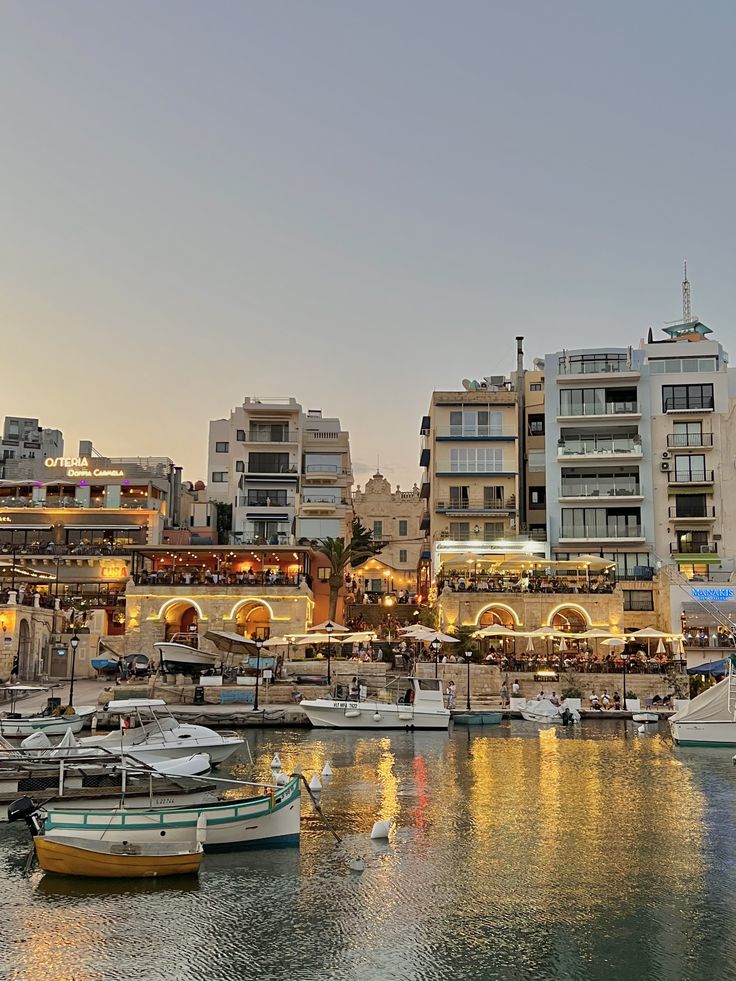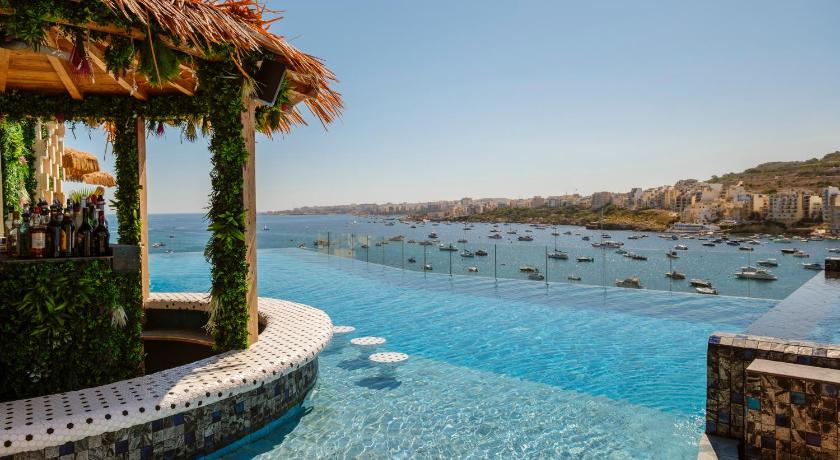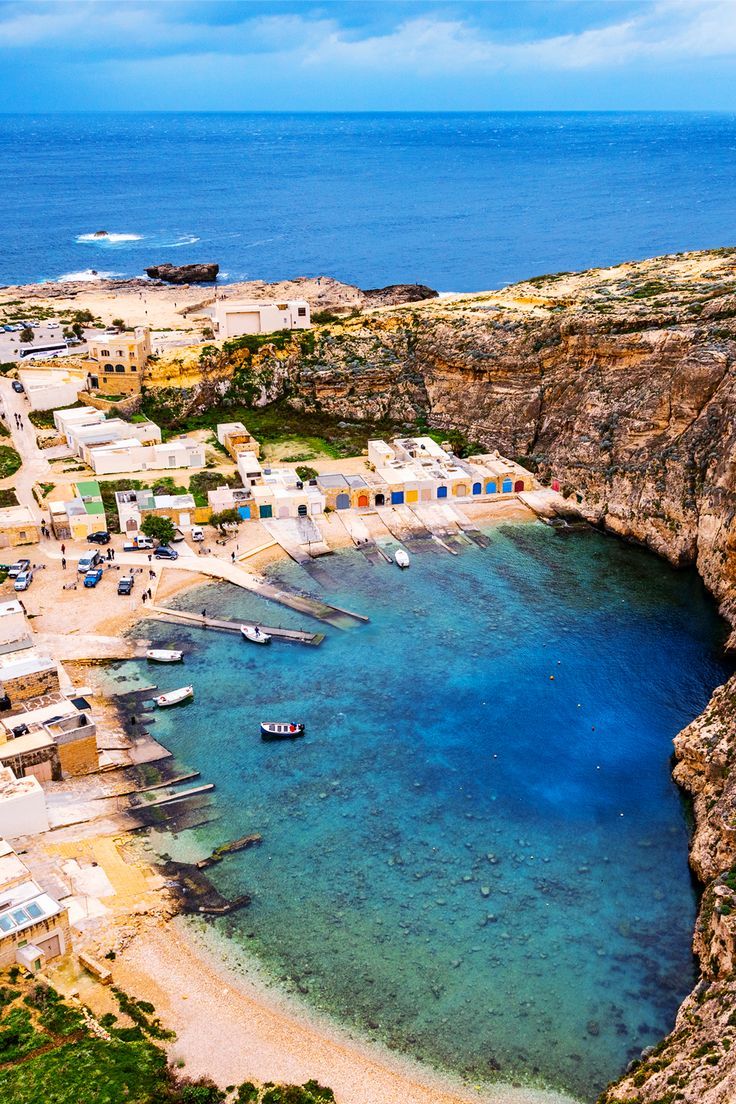
Qawra (pronounced ow-ra) is a coastal resort on St. Paul's Bay, sitting at the quieter end of Malta's northern tourist strip. Where neighbouring Bugibba buzzes with bars and souvenir shops, Qawra offers a slower pace — a long seafront promenade, rocky swimming platforms, and a community of long-stay visitors and British retirees who've made this their year-round home.
The name means "rounded" in Maltese, after the shape of the rocky peninsula that juts into the sea. It's not a traditional Maltese village — Qawra was developed in the 1970s as hotel infrastructure spread west from Bugibba. What it lacks in historic charm, it makes up for in practicality: affordable rents, a flat walkable coastline, and everything you need within a few blocks.
If you're considering Qawra as a place to live — or comparing it against Bugibba and St. Paul's Bay — this guide covers everything: beaches, restaurants, transport, rental prices, and what daily life actually feels like.
Where is Qawra?
Qawra sits on the northeastern tip of St. Paul's Bay, about 25 minutes north of Valletta by car. It's immediately west of Bugibba — the two areas bleed into each other along the promenade, and most visitors can't tell where one ends and the other begins. The distinction matters to locals: Qawra is the calmer, more residential end.
The peninsula wraps around a rocky coastline, with Qawra Tower at the tip and the Salina salt pans to the south. The promenade stretches continuously from the Malta National Aquarium all the way to Salina Bay — one of the longest uninterrupted seafront walks in Malta.
Beaches and Swimming
Rocky swimming platforms
Qawra doesn't have a sandy beach. The coastline is rocky, with concrete swimming platforms and metal ladders providing water access. This is the norm across most of Malta — and Qawra's platforms are well-maintained and popular with locals year-round. The water is clear, calm inside the bay, and deep enough for swimming right off the rocks.
Qawra Point
At the tip of the peninsula, Qawra Point offers more rugged swimming with deeper water and fewer people. The Knights-era watchtower sits above — a good landmark for orientation. The swimming here feels more "wild" than the platforms, with rocky outcrops and small coves.
Salina Bay
South of Qawra, the Salina salt pans create a shallow, sheltered inlet. Not a swimming spot, but a genuinely interesting walk — salt has been harvested here since Roman times, and the traditional stone pans are still in use. Flamingos occasionally visit the adjacent wetland nature reserve.
Nearby beaches
- Bugibba rocky beach — 5 minutes east, same rocky style
- Golden Bay — 20 minutes by car, one of Malta's best sandy beaches
- Mellieha Bay — 15 minutes by car, Malta's largest sandy beach, shallow water
Things to See and Do
The Promenade
Qawra's main attraction is its promenade — a flat, paved walkway running the entire length of the coast. It's popular with joggers, dog walkers, and the retiree community for daily constitutionals. Evening strolls along the promenade, stopping at a waterfront cafe, is the quintessential Qawra lifestyle.
Salina Salt Pans
The salt pans at Salina Bay are one of the oldest industrial sites in Malta, producing sea salt since Roman times. St. Paul's Bay itself played a role in the Great Siege of 1565 — the relief force (the Grande Soccorso) landed here in September, helping to break the Ottoman siege of Fort St. Elmo and the Grand Harbour defences. Salt is still harvested here by hand and sold as a boutique product. Free to visit and genuinely fascinating.
Malta National Aquarium
Located on the promenade in Qawra (a 10-minute walk from central Qawra), the Malta National Aquarium is Malta's largest, with tanks replicating Mediterranean and tropical marine environments. Good for families with children, and the building itself — designed to resemble a starfish — is striking.
Qawra Tower
One of the Knights of St. John's coastal watchtowers, built around 1638 to guard against pirate raids. The tower now houses a restaurant, offering sea views from its terrace — one of the best vantage points on the peninsula.
Restaurants and Eating Out
Qawra's dining scene is tourist-oriented but functional:
- Waterfront restaurants — a string of restaurants along the promenade serve fresh fish, pasta, and pizza with sea views. Quality varies; the ones furthest from the hotel cluster tend to be better
- Qawra Tower restaurant — set inside the historic Qawra Tower itself, with terrace seating and sea views
- Hotel restaurants — several of the larger hotels have decent restaurants open to non-guests, including buffet-style options
For a wider selection, Bugibba Square (10 minutes walk east) has a much larger restaurant scene. St. Paul's Bay old village (15 minutes walk) has more authentic Maltese kitchens.
Transport and Getting Around
Buses
Qawra is on Malta's northern bus corridor with frequent connections:
| Route | Destination | Frequency |
|---|---|---|
| 48, 49 | Valletta | Every 15-30 min |
| 203, 212 | Sliema via St. Julian's | Every 30 min |
| 41, 42 | Gozo ferry (Ċirkewwa) | Every 30-60 min |
| TD1, 214 | Airport express | Every 60-90 min |
Bus to Valletta takes about 35 minutes. To Sliema, about 50 minutes.
Driving
- Valletta: 25 min
- Sliema: 30 min
- Airport: 30 min
- Gozo ferry: 20 min
- Mellieha: 10 min
Parking is moderate — easier than Bugibba's seafront and significantly better than Sliema or St. Julian's.
Rental Prices in Qawra
Qawra is one of the most affordable coastal areas in Malta. Prices sit well below Sliema and St. Julian's, making it popular with retirees and budget-conscious expats.
| Property Type | Monthly Rent (approx.) |
|---|---|
| Studio | from €700 |
| 1-bedroom apartment | €800 – €1,050 |
| 2-bedroom apartment | €1,000 – €1,400 |
| 3-bedroom apartment | from €1,250 |
These are long-term rental prices. Short-term and summer rentals cost significantly more. Seafront properties command a premium — expect €100-€200 more per month for a promenade address.
Browse rental properties in Qawra to see current listings and exact prices.
What's it Like to Live Here?
The pros
- Affordable — one of the cheapest coastal areas in Malta
- Flat and walkable — the promenade is level and well-paved, ideal for older residents
- Good transport links — on the main northern bus corridor
- Year-round community — the retiree population keeps the area alive in winter when other tourist strips go quiet
- Sea access everywhere — swimming platforms along the entire coast
- Parking — manageable compared to central Malta
The cons
- No sandy beach — rocky swimming only; nearest sand is a 15-minute drive
- Tourist-heavy in summer — hotels fill up and the promenade gets crowded
- Limited dining — enough for daily life, but less variety than Sliema or St. Julian's
- Quiet in winter — some restaurants and hotels close outside tourist season
- Not much nightlife — a few bars, but nothing like Paceville
- Architecture — 1970s hotel blocks aren't Malta's prettiest
Who is Qawra best for?
Qawra suits people who want affordable coastal living without the intensity of Malta's busier areas:
- Retirees — the flat promenade, year-round community, and affordable rents make this one of Malta's most popular retiree areas, especially with British expats
- Budget-conscious expats — coastal living at inland prices
- Long-stay visitors — monthly winter lets are popular with northern Europeans escaping cold weather
- Families with young children — flat, safe, with swimming access and the aquarium nearby
If nightlife is a priority, look at St. Julian's. If you want a more traditional Maltese village feel, consider St. Paul's Bay old village instead.
Qawra vs Bugibba
These two neighbours are often confused, but they feel different:
| Factor | Qawra | Bugibba |
|---|---|---|
| Vibe | Relaxed, residential, slower | Busy, commercial, louder |
| Promenade | Longer, quieter | Shorter, more crowded |
| Restaurants | A few quality options | Many, varied |
| Nightlife | Minimal | Bars and a casino |
| Rent prices | Slightly lower | Slightly higher |
| Parking | Easier | Harder |
| Winter feel | Quieter but still inhabited | More dormant |
The short version: Qawra is the relaxed end of Bugibba. If you want calm and a daily promenade walk, pick Qawra. If you want restaurants and evening activity within walking distance, pick Bugibba.
Nearby Areas Worth Considering
- Bugibba — busier, more amenities, right next door
- St. Paul's Bay — the old village, more authentic Maltese character
- Xemxija — quieter still, on the western side of the bay
- Mellieha — Malta's northern tip, best beaches, family-oriented
FAQ
Is Qawra a good place to live?
Yes — if you value affordability, flat walkable terrain, and coastal living. It's one of Malta's cheapest coastal areas and has a genuine year-round community, especially among British retirees. The trade-off is limited nightlife and a tourist-heavy summer season.
How far is Qawra from Valletta?
About 25 minutes by car, 35 minutes by bus. The TD1 and 214 airport routes also stop at Qawra.
Is Qawra expensive?
No. Qawra is one of the most affordable coastal areas in Malta. Studios start around €700/month and 2-bedroom apartments from €1,000/month for a long-term lease — roughly 30-40% cheaper than equivalent properties in Sliema.
Does Qawra have a beach?
Not a sandy one. Qawra has rocky swimming platforms and natural rock pools along the coast. Malta's best sandy beaches (Golden Bay, Mellieha Bay) are within 15-20 minutes by car.
Is Qawra good for retirees?
Very. The flat promenade, affordable rents, year-round community, and good transport links make it one of Malta's most popular areas for retirees, particularly from the UK. The pace of life suits a retirement lifestyle.
Does Qawra close in winter?
Partially. Some restaurants and hotels close outside the tourist season (November-March), but the permanent retiree community means Qawra stays more alive than other tourist strips. Essential services remain open year-round.